Riverfront Park & Spokane Falls
A 100-acre park built around a roaring waterfall in the middle of downtown.
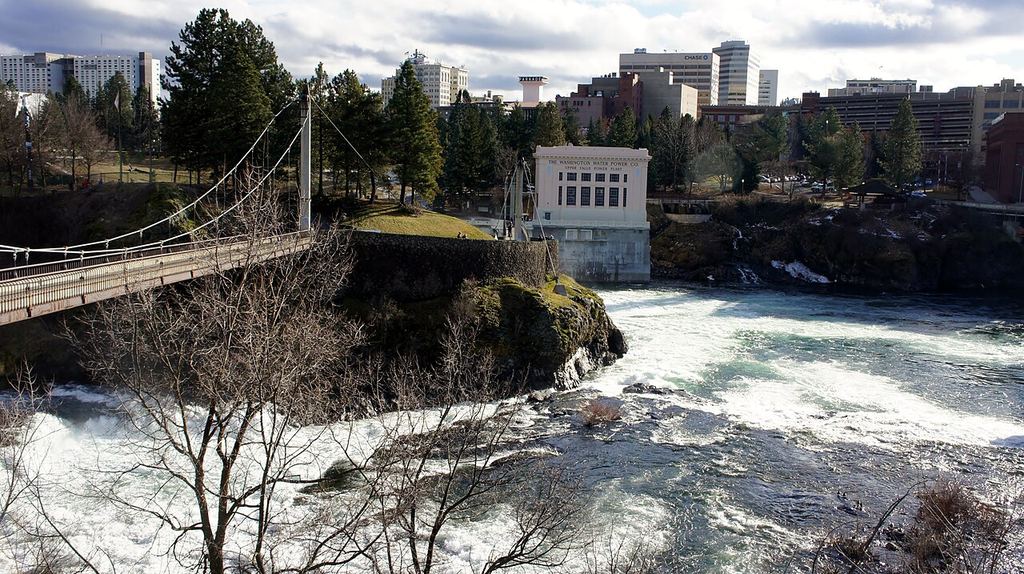
Most cities keep their waterfall at the edge of town. Spokane's is a short walk from the hotels. The Spokane River drops over rock ledges right beside the downtown skyline, and Riverfront Park wraps around it with trails, bridges, a big lawn, a carousel and a gondola ride into the gorge.
The park covers about 100 acres and is free to walk through. You can spend ten minutes crossing a footbridge for the view or a whole day moving from the falls to the rides to a picnic on the grass. If you only have a few hours in Spokane, start here.
Come in spring if you can. Snowmelt makes the falls loud and white from roughly March through June. In winter the park turns into an ice-skating spot, and in summer the lawns fill with people and food trucks.
What to see and do
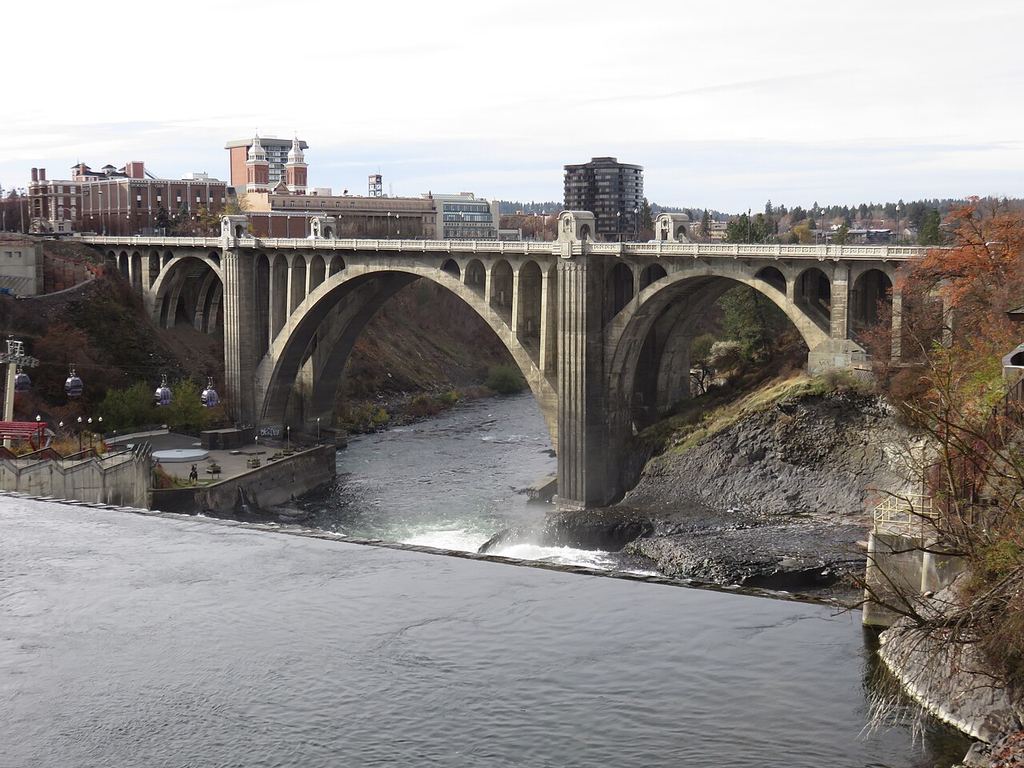
Walk the footbridges and riverbank paths for close looks at the Upper Falls, then continue downstream toward the Monroe Street Bridge for the Lower Falls. Spray and noise peak in spring.
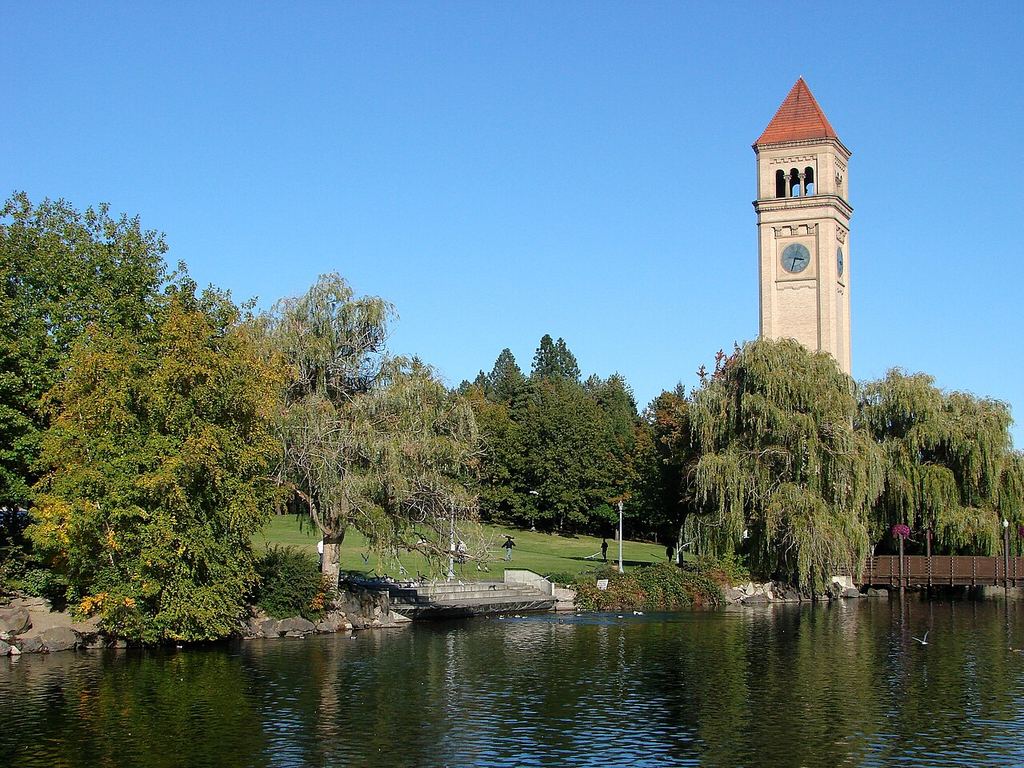
The brick tower from 1902 is all that is left of the old rail depot. It is a handy landmark and a classic photo backdrop with the lawn in front.
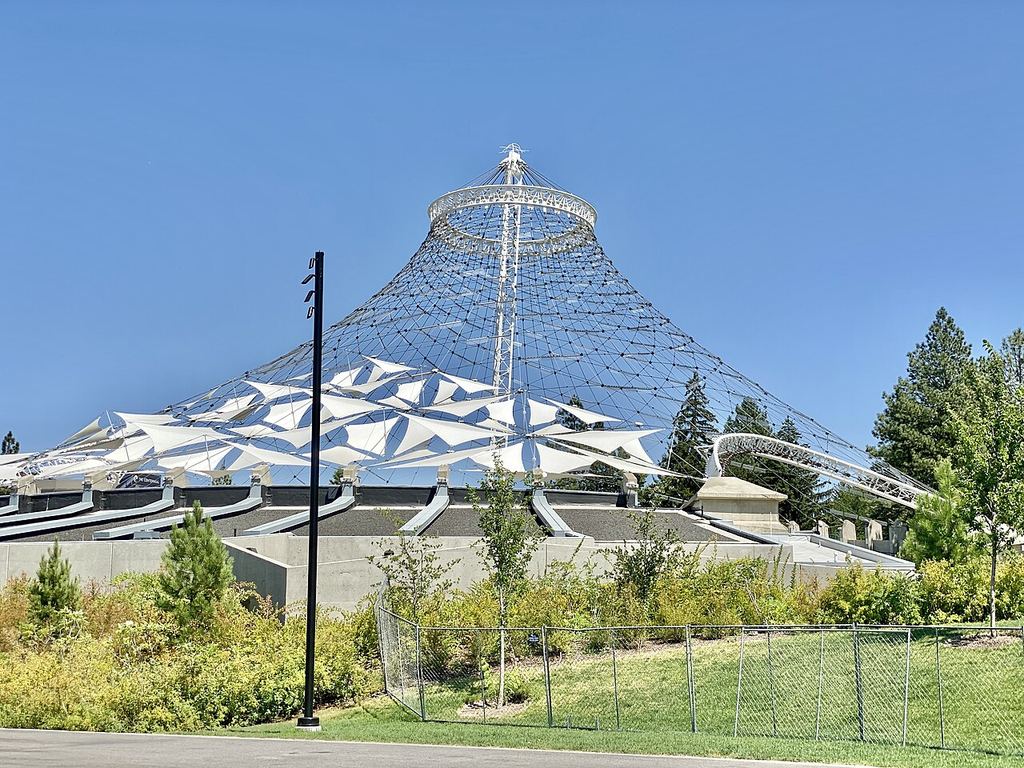
The sail-like roof from Expo '74 is the park's most recognizable shape. At night it is often lit with changing colors, and the space below hosts events and concerts.
A 12-foot-tall wagon sits at the top of a hill with a long slide down the side. Kids climb in and ride down; adults mostly take photos.
Below the Monroe Street Bridge, Huntington Park looks over the Lower Falls and the gorge. It is one of the best spots to watch the river drop.
A 715-foot winding path for roller skating in spring and summer and ice skating from November through February, with skate rentals on site.
The Numerica SkyRide and the 1909 Looff Carrousel are both inside the park. See their own guides for prices and details.
Local tips
- Go in spring (March to June) for the biggest falls; fall and winter are calmer but still pretty.
- See the falls first while you are fresh, then wander the lawns, clock tower and rides afterward.
- Sunset is good from the Monroe Street Bridge area and Huntington Park, looking west toward the falls and gorge.
- Cars cannot drive through the park. Park at a lot on the edge and walk, or use the Park Connect electric cart shuttle that loops the park every 20 minutes.
- On weekdays you can pay a lower early-bird parking rate if you arrive early and leave by 6 p.m., based on the city's posted rates; check current prices before you go.
- Pair the park with a coffee or lunch in the downtown blocks on the south side; the Davenport Hotel is about a ten-minute walk.
- Bring layers. Near the falls it is cooler and damp, and summer afternoons on the open lawns can be hot.
- Event days (concerts, Hoopfest, festivals) change parking and crowds a lot. Check the park's calendar first.
A little history
For the Spokane people, the falls were a gathering place and fishing site long before the city existed; the traditional name is Stluputqu, meaning swift water. The city was first named Spokane Falls. Later the land beside the river filled up with railroad tracks and warehouses, and the falls were mostly hidden from view.
That changed when Spokane hosted Expo '74, a world's fair with an environmental theme. Civic leaders cleared the rail yards and built the fairgrounds on the island and riverbanks. The fair ran May 4 to November 3, 1974, and the site became Riverfront Park, dedicated in 1978. Landmarks to look for: the Great Northern Railway clock tower, which dates to 1902 and stands about 155 feet tall; the U.S. Pavilion, whose white tent-like roof is now a Spokane icon; and the Garbage Goat. The Red Wagon, a 12-foot-tall giant toy added in 1990, is the kid favorite.
Have a great photo of Riverfront Park & Spokane Falls? Share it
We'd rather show the real thing than a stock shot. Send a photo you took or have the rights to and we'll credit you on this page.
Photos
Happening nearby
Questions visitors ask
Is Riverfront Park free?
Yes, entering and walking through the park is free. Individual attractions such as the SkyRide, Carrousel and ice skating charge their own fees.
What are the park hours?
The park itself is open from 6 a.m. to midnight daily, as of fall 2026. Rides have shorter, seasonal hours.
When is Spokane Falls at its biggest?
Snowmelt makes the flow strongest from about March through June. It is still worth seeing the rest of the year.
Where do I park for Riverfront Park?
Use one of the paid lots at the park's edge or street parking downtown. Vehicles cannot drive into the park. Check the city's parking page for current rates.
Is there ice skating in Riverfront Park?
Yes. The Numerica Skate Ribbon is an ice rink from about November through February, then switches to roller skating in spring and summer.
What is left from Expo '74?
The U.S. Pavilion, the Garbage Goat, the park layout itself, and the 1902 clock tower from the railroad era that the fair built around.
More downtown staples
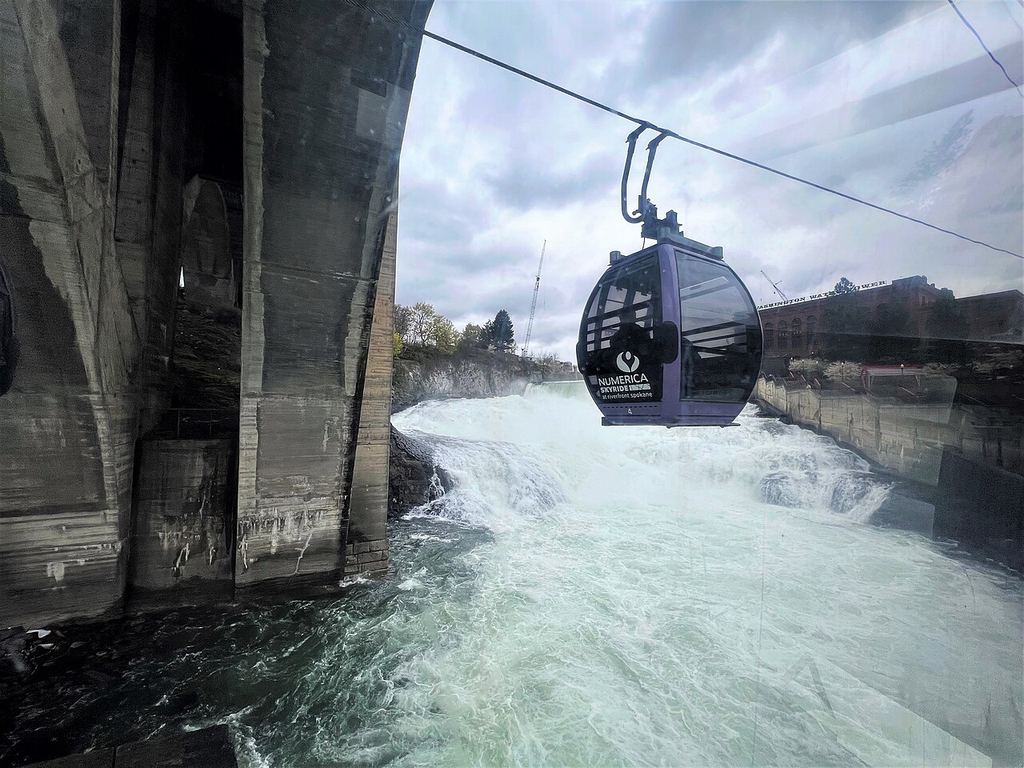 Ride / Attraction · DowntownNumerica SkyRideAn enclosed gondola that drops 200 feet over the falls and gorge.
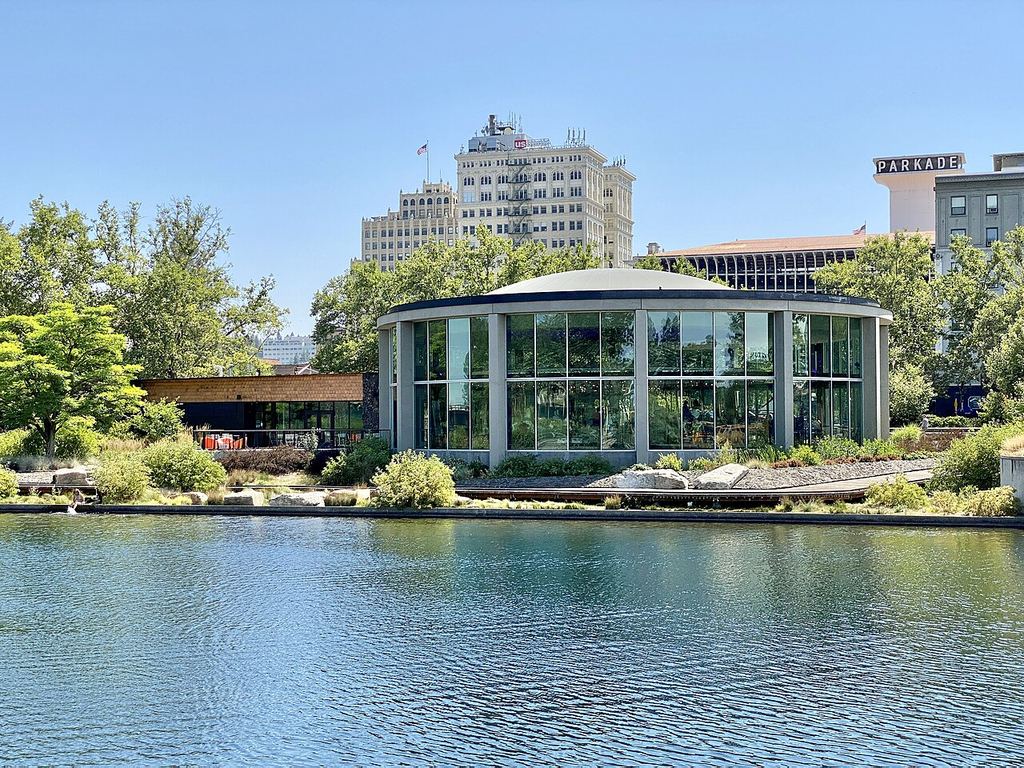 Historic ride · DowntownLooff CarrouselA hand-carved 1909 carousel with 54 horses and a ring to catch.
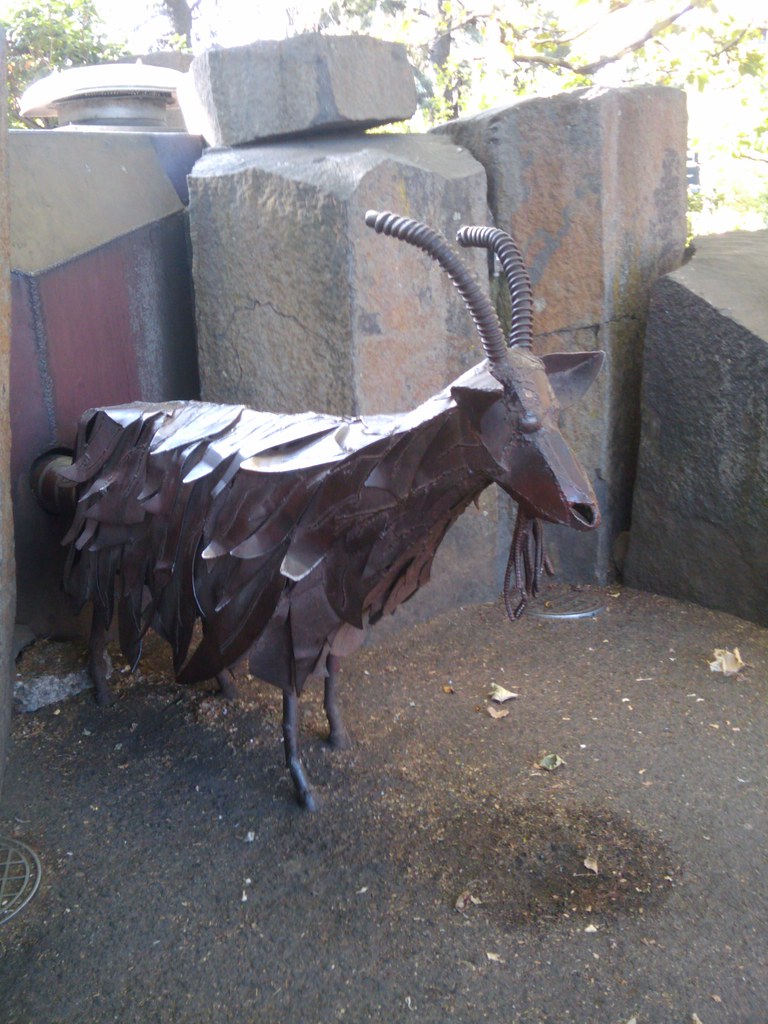 Public art / Landmark · DowntownGarbage GoatA steel billy goat from 1974 that really does eat your trash.